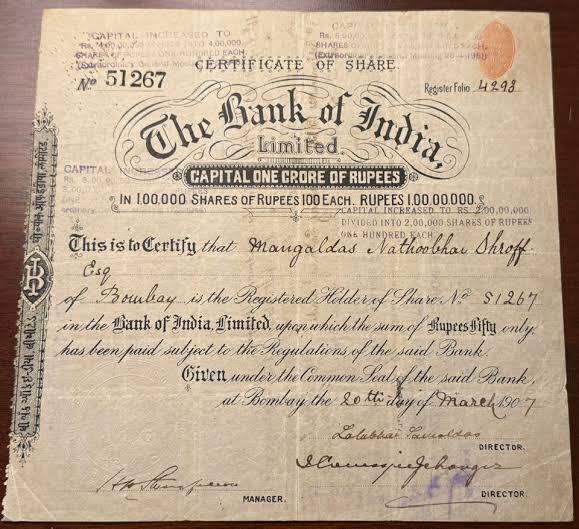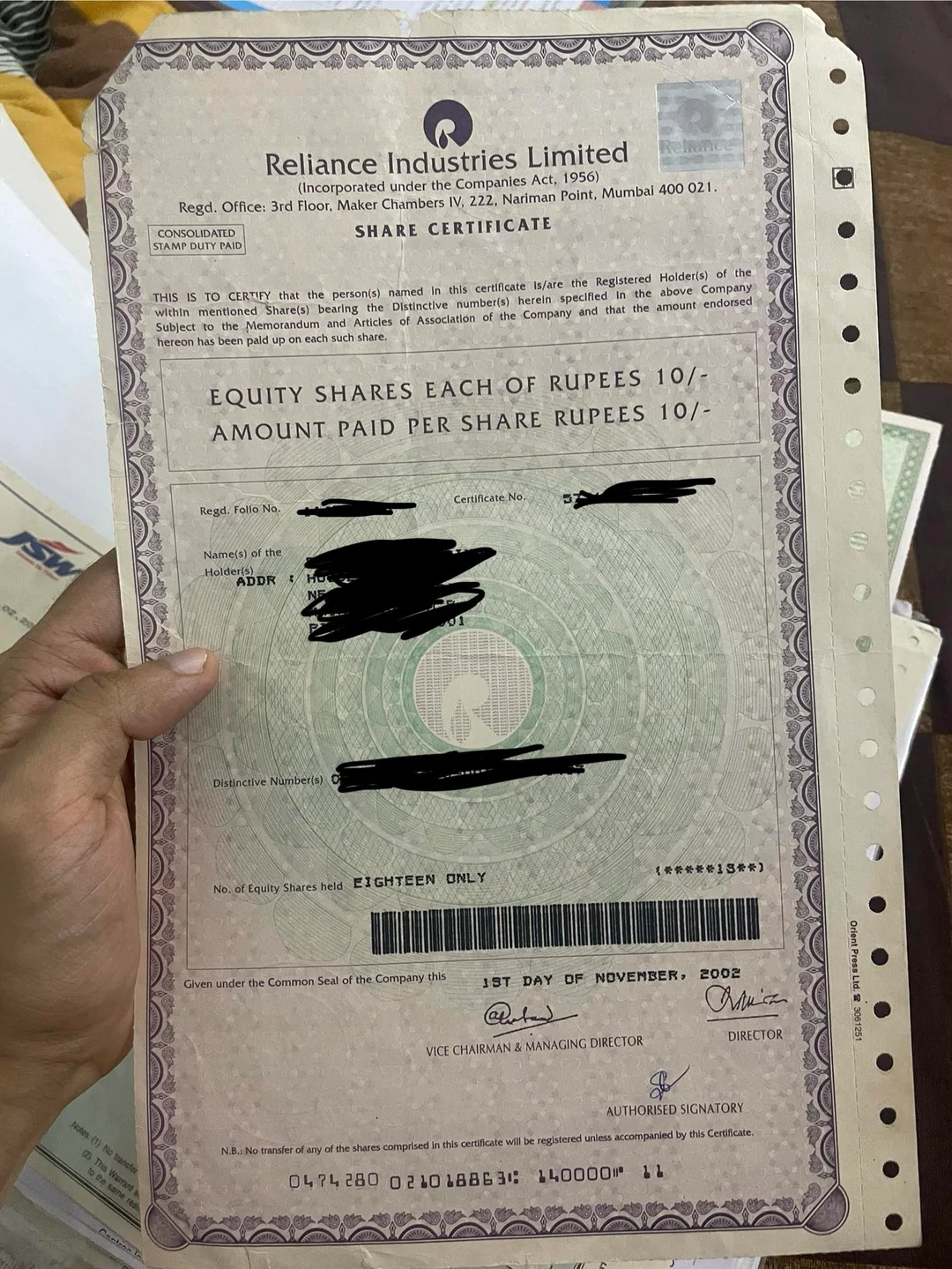
Yes, shares can be transmitted without a succession certificate in several situations. A succession certificate is not automatically required every time a shareholder dies.
Under SEBI's revised transmission framework effective from August 2026, the documents depend on factors such as whether a nominee exists, whether there is a surviving joint holder, the value and mode of the securities, and whether the claim is disputed.
For eligible claims without a nominee, simplified documentation can be used for holdings up to ₹10 lakh in physical form per listed company and up to ₹30 lakh in dematerialised form per beneficial owner. Within these limits, transmission may generally be completed without obtaining a succession certificate, subject to the prescribed documents and verification.
This guide explains when a succession certificate may not be required, what documents may be used instead, and when additional succession documents can still become necessary.
Updated for the 2026 SEBI framework: Older articles may still refer to simplified-documentation limits of ₹5 lakh for physical securities and ₹15 lakh for demat holdings. SEBI revised these limits in 2026.
What Is Transmission of Shares?
Transmission of shares is the process through which securities held by a deceased investor are moved to the person or persons entitled to receive them.
Transmission is different from a normal transfer of shares.
A transfer usually takes place because the holder voluntarily sells or transfers securities to another person. Transmission takes place because of an event such as the death of the security holder and is handled according to the applicable succession, nomination and securities rules.
The process may involve:
A surviving joint holder
A registered nominee
A legal heir
A successor to the estate
An administrator or other legally entitled claimant
Is a Succession Certificate Mandatory for Transmission of Shares?
No. A succession certificate is only one of the documents that may be relevant in a transmission case.
Whether it is required depends on the facts.
Situation | Is a Succession Certificate Normally Required? |
|---|---|
Surviving joint holder | Generally no. The rule of survivorship applies, subject to the prescribed process. |
Valid registered nominee | Generally no for transmission to the nominee, subject to required documents and verification. |
No nominee, claim within simplified-documentation limit | Not necessarily. The prescribed indemnity and affidavit-cum-NOC or an eligible family settlement route may be used. |
No nominee, claim above simplified-documentation limit | A succession certificate is one possible document, but other recognised succession documents may also be accepted. |
Competing or disputed claims | A court or other legal process may become necessary depending on the dispute. |
The important point is that "no succession certificate" does not mean "no documentation." The claimant still needs to establish identity, death of the holder, the securities involved, and the right to receive them.
Situation 1: There Is a Surviving Joint Holder
If securities are held jointly and one of the holders dies, the position can be simpler than a sole-holder case.
Under the current SEBI framework, transmission to the surviving joint holder follows the rule of survivorship. The prescribed proof of death is central to the process.
This is different from a case where a sole shareholder dies without a nominee.
Therefore, a succession certificate should not be assumed to be necessary merely because one joint holder has died.
Situation 2: The Deceased Shareholder Had Registered a Nominee
Where a valid nomination exists, the nominee can apply for transmission using the prescribed transmission process.
The documents generally focus on:
The transmission request
Proof of death of the shareholder
The nominee's demat and identification records as applicable
The relevant security certificate or holding statement, depending on the mode of holding
A succession certificate is generally not required merely to transmit the securities to the registered nominee.
Important distinction: Transmission to a nominee and the final inheritance rights over the securities are not always the same legal question. Succession rights can depend on the applicable personal and succession law and the facts of the estate.
Situation 3: There Is No Nominee, but the Claim Falls Within the Simplified-Documentation Limit
This is one of the most important changes for families dealing with old shares.
Under SEBI's revised 2026 framework, the simplified-documentation thresholds are:
Mode of Holding | Simplified-Documentation Threshold |
|---|---|
Physical securities | Up to ₹10 lakh per listed company |
Dematerialised securities | Up to ₹30 lakh per beneficial owner |
For an eligible no-nomination claim falling within the applicable limit, a succession certificate is not necessarily required.
The prescribed documentation can include, as applicable:
Transmission Request Form
Latest Client Master List of the claimant's demat account
Verifiable death certificate
Original security certificate or relevant holding statement, depending on the mode of holding
Notarised indemnity bond
Notarised affidavit-cum-No Objection declaration from the legal heirs
An eligible family settlement deed may also be used in place of the affidavit-cum-NOC route where the prescribed conditions are met.
The exact documents should be checked against the latest form and the requirements of the concerned listed company, RTA, depository or DP.
What Is Quick Transmission Processing?
SEBI's 2026 framework introduced a separate Quick Transmission Processing (QTP) category for eligible low-value claims.
Mode of Holding | QTP Value Limit |
|---|---|
Physical securities | Up to ₹10,000 |
Dematerialised securities | Up to ₹30,000 |
QTP is intended to reduce paperwork for eligible small-value cases. Where there is no nominee, additional eligibility conditions apply, including prescribed relationship conditions.
This route can be relevant for immediate-family claims involving small holdings, but the claimant should use the current prescribed QTP form and documentation rather than relying on older transmission formats.
What Happens If the Value Is Above ₹10 Lakh or ₹30 Lakh?
Crossing the simplified-documentation threshold does not automatically mean that a succession certificate is the only option.
Under the revised framework, depending on the facts, recognised succession evidence may include documents such as:
A Will, together with the prescribed supporting documentation
A Legal Heirship Certificate or equivalent certificate issued by the competent authority, together with prescribed supporting documentation
A Succession Certificate
A Letter of Administration
A Court Decree
The accompanying requirements differ depending on which succession document is being relied upon.
For example, where a claimant relies on a Will or a Legal Heirship Certificate, the prescribed indemnity may also be required.
The 2026 framework also removed a blanket requirement for probate of a Will in the transmission process. This does not mean probate can never be relevant under succession law; it means it should not be treated as a universal transmission requirement in every case.
Example: Physical Shares Worth ₹6 Lakh and No Nominee
Consider a deceased shareholder who held physical shares in a listed company worth approximately ₹6 lakh and had not registered a nominee.
Because the value is within the current ₹10 lakh simplified-documentation threshold for physical securities, the legal heirs may potentially use the simplified documentation route instead of obtaining a succession certificate.
The case may involve the prescribed transmission request, death certificate, demat details for receiving the securities, indemnity and affidavit-cum-NOC or another permitted arrangement.
However, the actual eligibility still depends on the facts and whether there is any dispute between the heirs.
Example: Demat Holdings Worth ₹20 Lakh and No Nominee
Suppose the deceased investor had securities worth ₹20 lakh in a demat account with no registered nominee.
The amount falls within the current ₹30 lakh simplified-documentation threshold for dematerialised securities.
Subject to the applicable conditions and complete documentation, the claimant may be able to complete the transmission without obtaining a succession certificate.
This is an important difference from older guidance that may refer to a ₹15 lakh limit.
Example: Physical Shares Worth ₹18 Lakh and No Nominee
Now consider physical shares worth ₹18 lakh in one listed company.
This is above the standard ₹10 lakh simplified-documentation threshold for physical securities.
Additional succession evidence would therefore be relevant. But the claimant should not assume that a succession certificate is the only route.
Depending on the circumstances, a Will, Legal Heirship Certificate, Succession Certificate, Letter of Administration or Court Decree may be relevant under the prescribed framework.
What If There Are Several Legal Heirs?
When there are several legal heirs, the processing entity needs clarity about who is making the claim and whether the other heirs object to the proposed transmission.
For eligible simplified-documentation cases, SEBI's current framework uses a combined affidavit-cum-No Objection declarationrather than requiring separate affidavit and NOC documents in the older format.
A properly documented family settlement may also be relevant where the applicable requirements are satisfied.
If one or more heirs dispute the claim, the matter is no longer a straightforward uncontested transmission.
What If the Legal Heirs Do Not Agree?
The simplified route is designed for cases where entitlement can be established without a competing dispute.
If two or more people make conflicting claims to the same securities, an RTA, company, depository or DP is not expected to decide a substantive inheritance dispute like a court.
In such cases, a court order or other formal succession process may become necessary.
This is why the phrase "transmission without succession certificate" should not be understood to mean that every inheritance dispute can be settled using an indemnity and NOC.
What If There Is a Will?
A Will can be relevant evidence in a transmission claim.
Under the revised 2026 framework, probate of a Will is no longer a blanket requirement for securities transmission.
However, the existence of a Will does not automatically remove every other requirement. The processing entity may still need the prescribed transmission form, death certificate, claimant demat details, indemnity and other documents applicable to the specific case.
If the Will itself is disputed, the matter may require legal determination outside the normal transmission process.
What Is a Legal Heirship Certificate?
A Legal Heirship Certificate, or an equivalent certificate issued by a competent government authority, may be used as recognised succession evidence in applicable transmission cases.
This can be relevant particularly for claims above the simplified-documentation threshold where the claimant does not have a succession certificate but can establish heirship through another recognised route.
The exact issuing authority and document requirements can depend on the applicable jurisdiction and the nature of the certificate.
What Documents Should You Collect Before Starting?
Before approaching the company, RTA or DP, collect the available records and identify the type of case.
Record | Why It Matters |
|---|---|
Death certificate | Establishes the death of the registered holder. |
Share certificate or holding statement | Helps identify the securities and folio/account. |
Nomination details | Determines whether a registered nominee route is available. |
Demat Client Master List | Provides the account into which eligible transmitted securities can be credited. |
Legal-heir information | Identifies other people who may have an interest in the estate. |
Will, if any | May be relevant succession evidence. |
Legal Heirship Certificate, if available | May provide an alternative recognised route in applicable cases. |
Previous company or RTA correspondence | Can reveal old folio, KYC or documentation issues. |
What About Old Physical Share Certificates?
Physical-share transmission now needs to be viewed together with dematerialisation requirements.
Where a transmission request for physical securities is approved, the current SEBI process provides for credit in dematerialised form through the prescribed mechanism.
The claimant should therefore have an appropriate demat account and ensure that the claimant details are suitable for the proposed credit.
If the original physical certificate is lost, a duplicate-cum-transmission process or additional documentation may be required.
Does the 2026 Framework Apply to IEPF Cases?
SEBI's July 2026 circular directs processing entities to adopt a similar approach for transmission of securities that have already been transferred to the Investor Education and Protection Fund.
However, an IEPF claim also operates under the Companies Act and IEPF Rules.
Therefore, a claimant dealing with shares already transferred to IEPF should check both the transmission requirements and the current IEPF claim requirements rather than assuming that an ordinary RTA transmission completes the entire recovery.
How Long Should Transmission Take?
Under SEBI's revised framework, processing entities are expected to process a transmission case within 21 calendar days from receipt of all required documents.
This timeline should not be confused with the time needed to collect missing legal documents, resolve a dispute, obtain a duplicate certificate or complete other steps before the transmission request becomes complete.
If a request is delayed or rejected, the reason should be communicated to the claimant in writing under the current framework.
Common Mistakes in Transmission Cases
Assuming a succession certificate is compulsory in every death case.
Using old ₹5 lakh and ₹15 lakh threshold information after the 2026 changes.
Not checking whether a nominee was registered.
Ignoring surviving joint holders.
Applying the simplified route to a disputed inheritance.
Submitting old transmission forms instead of the current prescribed forms.
Not preparing the claimant's demat account before starting a physical-share transmission.
Assuming a Will always needs probate for the transmission process.
Failing to identify all legal heirs before obtaining the required declarations.
Treating an IEPF case as identical to an ordinary transmission case.
Transmission Without Succession Certificate: Quick Decision Guide
Question | What It Usually Means |
|---|---|
Is there a surviving joint holder? | Succession certificate is generally not required for transmission under survivorship. |
Is there a valid registered nominee? | Transmission to the nominee generally does not require a succession certificate. |
No nominee and physical holding up to ₹10 lakh? | Simplified documentation may be available without a succession certificate. |
No nominee and demat holding up to ₹30 lakh? | Simplified documentation may be available without a succession certificate. |
Is the claim above the applicable threshold? | Additional succession evidence is required, but a succession certificate is not the only recognised option. |
Are the heirs disputing the claim? | A formal legal or court process may be required. |
Frequently Asked Questions
Can shares be transferred to a legal heir without a succession certificate?
Yes, in eligible transmission cases. Under the current SEBI framework, a succession certificate is not mandatory in every case. The applicable route depends on nomination, joint holding, value, mode of holding and whether the claim is disputed.
What is the current limit for transmission without a succession certificate?
For eligible no-nomination cases under the simplified-documentation framework, the current thresholds are up to ₹10 lakh for physical securities per listed company and up to ₹30 lakh for dematerialised securities per beneficial owner.
Is the old ₹5 lakh physical-share limit still applicable?
For the SEBI transmission framework discussed in this guide, the standard simplified-documentation threshold was revised in 2026 from ₹5 lakh to ₹10 lakh for physical securities. Older articles may therefore contain outdated limits.
Does a nominee need a succession certificate?
Generally, a registered nominee does not need a succession certificate merely to complete transmission to the nominee, subject to the prescribed documentation and verification.
Do surviving joint holders need a succession certificate?
Generally, transmission to the surviving joint holder is handled under the rule of survivorship rather than through a succession certificate process.
What if there is no nominee and no Will?
A claim may still be possible without a succession certificate if it falls within the applicable simplified-documentation limit and the prescribed legal-heir documentation can be completed. Disputed cases or higher-value claims may require additional succession evidence.
Can I use a Legal Heirship Certificate instead of a Succession Certificate?
A Legal Heirship Certificate or equivalent certificate issued by a competent authority is recognised as one of the possible succession documents in applicable cases under the current framework, together with the prescribed supporting documents.
Is probate of a Will compulsory for share transmission?
SEBI's revised 2026 framework removed a blanket requirement for probate of a Will in the transmission process. However, legal requirements can still depend on the facts, applicable succession law and whether the Will is disputed.
How long does transmission take after all documents are submitted?
The current SEBI framework provides for processing within 21 calendar days from receipt of all required documents. Cases with missing documents, disputes or additional legal steps can take longer before a complete request is available for processing.
Can the same process be used for shares already transferred to IEPF?
SEBI has directed processing entities to adopt a similar transmission approach for securities transferred to IEPF, but the claimant must also comply with the applicable IEPF claim process and rules.
How Infiny Solutions Can Assist
Transmission cases can become complicated when there is no nominee, several legal heirs, old physical certificates, an IEPF transfer, a lost certificate or differences in shareholder records.
Infiny Solutions can review the available shareholding and family records, help identify the transmission category that may apply, and help the claimant understand the documentation and next steps.
Unsure whether you need a succession certificate for your share transmission case?
Infiny Solutions can review the available records and help identify the appropriate transmission route based on the holding, nomination status and claimant documents.
No professional service can guarantee approval or bypass the prescribed requirements. The final process remains subject to the applicable law, SEBI framework and verification by the concerned company, RTA, depository, DP or IEPF Authority, as applicable.
Conclusion
A succession certificate is not mandatory for every transmission of shares after death.
Cases involving surviving joint holders or registered nominees can generally proceed without one. In eligible no-nomination cases, SEBI's 2026 simplified-documentation framework can also allow transmission without a succession certificate for physical securities up to ₹10 lakh per listed company and demat securities up to ₹30 lakh per beneficial owner.
Even above these limits, a succession certificate is not always the only recognised document. A Will, Legal Heirship Certificate, Letter of Administration or Court Decree may be relevant depending on the circumstances.
The key is to identify the correct category before preparing documents. That can prevent claimants from spending time obtaining a succession certificate when another prescribed route may already be available.